Friday, November 18, 2005

The rejection of means

"Thou shalt not have other gods before me."

I was born in a so-called Sikh family. All my grandparents and both my parents were born Sikhs. The customs of Sikh culture, the ceremonies of birth, marriage and death, the akhand paaths, going to gurudwaras, doing ardaas, bowing in front of the Adi Granth, having prashad, eating langar, wishing each other Sat Sri Akal etc. were the things I went through right from childhood.

In 1980s, When I was in school, Punjab was going through its worst years of terrorism. I became an advocate myself of militant Sikh separatism, having had a facile introduction to Sikh grievances and having read some radical literature. It was a stupid, ill-thought-out and childish stance and I became a bully, and a believer in my own superiority.

That soon disappeared as I learnt the horrible things being done in the name of Sikh autonomy and when the terrorists tried to enforce Khalsa uniforms (orange turbans and black trousers) in schools, that finally made me realize the harm in violent and coercive means to freedom.

I never went in for the devout form of Sikhism anyway, in which one recites the hymns and scriptures every day for hours.

...

Due to the influence of my father, I also became during that time a worshipper of power, manifest in the totalitarian aspects of Soviet Union (my father considered Soviets a great success) and of Nazi Germany (which I picked up on my own). I drooled over their leaders and hungrily absorbed anything which I learnt about them and turned a blind eye to their excesses and inhuman treatment of the dissenters in their regime.

That also did not last long, for I had an episode of infatuation in my last year in school and I became the worshipper of romantic love, longing and poetry. I read poems by Kahlil Gibran, listened to sad songs of separation and became a pacifist outwardly.

I left school in 1991 and had to think of what I wanted to become in life.

...

As long as I can remember, I have been a technophile. I loved tinkering with equipment, especially electronic and digital devices. The next two years were spent in the happy service of science when I studied with gusto the fundamentals of mathematics, physics and chemistry. Due to my great natural interest in these subjects, I easily cleared the IIT entrance examination and was on my way to become a computer engineer, which I had always wanted to become.

At IIT, however, I faced a certain disillusionment. I found that I had little time to spend on my natural interest in computer technology and I was made to competitively study and memorize subject matters in which I had no interest.

I gave up on excelling academically in IIT and instead chose to devote my energies to becoming a computer expert, a hacker, not necessarily an expert in algorithms but an expert in the real world computing machinery.

Computers were my Gods during that period and the great programmers of the world were my heroes. I used to spend days, nights, weekends, vacations in the computing labs of IIT Delhi.

At the end of the second year, however, I took a course in logical thinking in western philosophy and found it my second nature. I also formed friendships with radical and liberal people in the institute who were not towing the establishment baggage of technological progress, of national praise and of the pursuit of wealth.

I became deeply interested in Eastern religions and started assimilating the thoughts of mystics, metaphysicians and saints from the east. I then underwent a course which was named "Science and Humanism" and it was taught by a long time practitioner of Buddhist meditation who was also a teacher of mechnical engineering at IIT and that course had a deep effect on me. I became convinced that the world was in a mess, that the solution was to change oneself fundamentally, and that the way was through awareness and meditation.

I went to the Dera Baba Jaimal Singh in Beas (also called the Radhasoami Dera) to learn about the only meditative practice widely prevalent in Punjab. My Nanaji (maternal grandparent) was an initiate in this sect but I found it the sect to be wanting in the depth of their insights. Mostly it was a rehash of scriptures from around the world.

After this, I went deep into non-regional spirituality. I underwent Buddhist meditation retreats, studied J Krishnamurti, became quiet, turned vegetarian, frugal and weak.

During the last year in college, I considered dumping all my background and becoming a small farmer in a remote village in India. But I guess that was just a youthful fantasy of inner grandeur.

I also studied modern western philosophy, including Wittgenstein, the positivists, the western mystics and the new age scientists who linked modern scientific theories with ancient spiritual insights.

...

After college, I seriously considered the possibility of becoming a school teacher in a school in Benares. It was a school started by J Krishnamurti to let the children and teachers evolve themselves spiritually.

I started on a pilgrimage of India. During that journey, I went for the interview in the Rajghat school in Benares, was asked to come and join, but wasn't too sure myself as I found the teachers lacking the fire of inner inquiry and the atmosphere a little stifling.

I continued my journey visiting the holy places in India. While in Chennai I received an email from a friend in the US asking if I would like to come to the US to work as a computer engineer. I thought about it a little, still warm from the advice given to me by the principal of Rishi Valley school, Radhika Herzberger, that I should earn enough money to support myself in my spiritual quest before jumping in.

I decided to go to the US, but for the next 5 months, studied all kinds of things and travelled around while waiting for my US visa.

I went to the US in February 1998.

...

While in the US, my spiritual quest manifested itself in dissatisfaction with my mode of living, in which I was spending most of my day in earning money by writing computer programs. The discontent kept simmering and it finally boiled over after an year and I returned to India in February 1999. For three months I went around the country once again, searching for my next phase, but didn't find anything which locked my attention. My family was also against my retirement after only one year of working and my brother needed financial support for his upcoming studies in the US, so I grudgingly went back to the US.

This time, I was there to have fun, not to save for my future. I bought a motorcycle, started touring the western US, made new friends who were into radical ways of living, attended meditation retreats, went to Canada and Mexico, took a 15-day long hippie bus tour of the entire breadth of the US, and became ready to retire from active life.

I returned to India for good in January 2001, having saved enough money for a lifetime of simple living.

...

I was ready to plunge deep into meditation and spirituality, and to prepare my body for the arduous journey which I knew would involve long periods of motionless sitting, I underwent a six month period of training in yoga asanas at various ashrams in India.

During this phase, I came to know of an enlightened sage in a small city in Madhya Pradesh and I went to meet him. That was to set the direction of my spiritual search.

I found him to be full of insights about the mind, its deceptions, about awareness and the fundamental problem of suffering in life. I became his disciple, and started practicing long sessions of inner awareness and silence.

However, being an independent person, I could not digest his exhortation to surrender my will to him. At times I wanted to do nothing else but give my life to him, at other moments I had grave doubts about my destiny and the way of surrender.

His basic teaching, with which I fully agreed, was that the world was an unsatisfactory plane of existence, and the consciousness which has become tied to being identified with the body is trapped in the illusion of life and death. As long as this illusion remains, suffering continues in the form of birth, life and death and rebirth in various forms.

And what was the way to detach the consciousness from the body?Awareness, being a spectator and a witness of oneself and the world rather than the doer and the enjoyer. But being the witness could only take oneself so far, ultimate release came through surrender of one's self and will to the guru.

I became passionate about love, silence and inner awareness. I became convinced that the guidance of a guru was the key ingredient in the recipe for enlightenment.

I started dissociating from the world of the senses. I changed my diet, my habits, I stopped any enjoyment of the worldly and sensory pleasures. I became austere and serious, full of love for everybody who came in contact with me. I started regarding the body as only a means to be free from the cycle of rebirth. I considered all life to be nothing but sorrow.

But my occasional enjoyment of a sunset, of a colourful bird, of a tasteful meal, of a cold bath, of an intelligent talk with someone left me with a doubt whether dissociation was really the way. I took to heart an aphorism of Sri Nisargadatta Maharaj: "Whatever pleases you, holds you back." And my teacher had pointed our several times that even a pinpoint worth of worldly pleasure was enough to hold the consciousness to the body.

I was torn between the world of the senses and the world of pure love and awareness. I considered this doubt as my failing, that my mind and ego wanted to remain in this world and that it was the enemy of my enlightenment (as has been pointed out by mystics throughout the ages).

I started practicing the observation of the mind's capacity to enjoy and practiced each moment my becoming the observer instead of the enjoyer or even the doer.

But slowly and slowly, my discontent with my guru's teaching of surrender, and his retrogressive views on society and science, came to the fore and bereft of devotion, I soon found a lot of shortcomings in his thoughts, teachings and way of life. Finally I told him that I was going to leave him for a better teacher and he became withdrawn and distant. Strangely, the moment I told him that I was going to leave him, someone died in the ashram just 30 feet away from us. And as I left the ashram the next day, a great dust storm suddenly formed itself and fierce winds started blowing. Maybe it was just a coincidence but I was a little scared that I was leaving my guru and my life and countless next births would be wasted in a confused search and lost wanderings.

So three years after my initial contact with him, I came back home, not knowing what I was to do next but having confidence in my ability to get through this directionlessness and despair.

Through these years, I had already studied and rejected the more orthodox means of spiritual salvation, including idol worship, chanting, selfless work, intellection and the study of scriptures, pilgrimages, new age techniques of reiki, pranic healing, yoga, concentration, and so on.

Association with the enlightened (sat-sang), and the path of surrender (bhakti and samarpana) had also failed for me. I do think that my teacher was genuinely enlightened, and I still think that surrender is one of the easiest ways to enlightenment but I had been unable to surrender my intelligence and my independence to my guru. I was unable to love his tangible self to the point of self-forgetfulness and to love his intangible Self was not good enough for my teacher.

After a few months of despair, I again started my search. I was convinced that intelligence and awareness are the keys to becoming happy, that sheer intelligence led to intellectual games and that developing the attitude of a witness made one unable to function properly in the world.

...

I was searching on the internet for other people's stories and experiences after they had left their gurus and fortunately I found an extremely interesting page called the Actual Freedom website.

It was a critique of spiritual enlightenment as a valid goal and a critique of the spiritual ways and means of becoming happy and peaceful in the world. The website contained mostly the experiences of a man who called himself only Richard. He was born in Australia and had been living in spiritual enlightenment for eleven years before finally discovering that enlightenment was a delusionary state and it only led to dissociation from the world whence one finally becomes one with the so-called Absolute in an altered state of consciousness (ASC) in which the feelings of love, compassion, oneness reigned supreme.

He found that there are two false selves inside every body. The ego, which is the social identity formed after birth, and the psychic Self, which is nothing but the basic instincts and feelings forming themselves into a psychic Being or Soul. The death of the ego results in spiritual enlightenment where one is nothing but the Soul and one becomes one with the universe, and which leaves the inner Being and the instincts intact. And then he experienced the death of his soul in what he calls a prolonged Pure Consciousness Experience (PCE) which was devoid of any feeling of is-ness or Being but which was an experience of pure awareness and sensation without any identity, either as a soul or an ego.

He finally saw that enlightenment promised happiness and freedom but instead delivered only an altered state of dissociation and self-centered bliss where one considers the whole world as one's creation. He called the second state, the one in which both the ego and the Self are absent, the state of actual freedom in which one finally lives as a physical body, in this physical world, experiencing sensations and living in happiness and harmlessness. This freedom belongs in the physical world, not in a metaphysical one; that is why he called it actual freedom rather than spiritual freedom.

Going through his website, I also remembered a few episodes in my life where I had experienced a carefree happiness devoid of any self-concern and also devoid of any bliss or compassion towards the sorrow of the world.

I found his ruminations about the various aspects of human condition extremely fascinating. I had an email conversation with him about celibacy and sex in which I finally discovered the extent to which I had been trying to suppress my instinctual sexual drive with spiritual and moral codes. The instincts, I found, are not to be suppressed or transcended, they are to be obliterated altogether from the body.

And as I had the living experience of being with a dissociated enlightened master for three years, and as I had had moments of dissociation from the body myself, I could easily understand his remarks about how enlightenment failed to fundamentally transform human nature and that even after enlightenment one remains a Self intact with all the instincts and polar opposites of love and hate, of trust and suspicion, of compassion and anger, of aggression and pacifism.

I do disagree with him on some details, but fundamentally I found his insights and experiences, coupled with my own spiritual experiences, compelling and worth a dedicated and sincere effort towards actual freedom.

...

So I am thirty now, having traversed a whole terrain of inner evolution and struggle for meaning.

As of now, I consider only the ongoing experience of happiness, freedom and harmlessness as a valid goal for every moment that one is alive. And this freedom and happiness only results from a ceaseless awareness and investigation of one's conditioning and instincts.

These days I am happier than ever. I am no longer hankering after enlightenment with austerities and long meditation sessions and I enjoy every living moment of my life.

Sunday, November 06, 2005

The ride to Goa and back

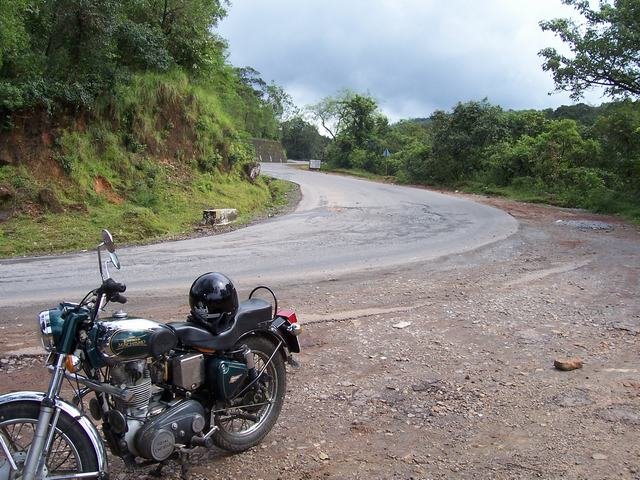
After my stint with Amazon India was over, I decided to have a long ride on my Enfield Machismo 350cc motorcycle. Goa was the obvious destination. It is about 700km from Bangalore, and the ride along the coast from Mangalore to Goa was supposed to be fabulous. One of my colleagues showed interest in joining me for the ride but dropped out later.

So it was to be a ride alone. I was thrilled at the prospect and started preparing with charting my route and getting the bike in perfect shape.

I got the bike inspected by my favorite garage in Bangalore (Mehboob Garage on Nandi Durg Road), got the chain and brake cables tightened. The day before the journey was to begin, filled up the tank, withdrew enough cash from the ATM, packed a few t-shirts and shorts in my backpack (along with a digital camera, some Mild Sevens and a road map) bought a loaf of wheat bread, had a light dinner and went to sleep, setting the alarm on my mobile phone to 4.30am.

Day One

Got up, got ready, prepared six sandwiches (peanut butter and orange marmalade), wore my weatherproof jacket, gloves and sandals (sandals were the odd item out in my motorcycle attire, but I consciously chose them as I wanted to carry only one pair of footwear and sandals would be perfect on the beach as well as in a shower, and it wasn’t too cold in October that my feet would get uncomfortably cold during the bike ride. If I had space in my backpack I would have worn boots.)

Started off at 5.30am, dropped the keys of the apartment at my office to be picked up by my ex-colleague. Bangalore was having heavy rains every afternoon during that time and it was already lightly drizzling at that early hour in the morning but I was pretty sure the rains would stop as soon as I quit the hilly regions around Bangalore.

I had a hazy idea of how to get onto Tumkur Road highway from the inner city but there being no road signs, lost my way towards the end and did a 10km detour to get on the highway, had to wait at a train crossing, which was good because I could get over my early morning daze. The sun was just beginning to lighten the eastern sky.

Once on the highway, I started the cruise in right earnest at a steady 70kmph. Tumkur road intersects NH 48 at a place called Neelamangala and even though it is a prominent enough intersection, I was wary and once asked a fellow roadster how far Neelamangala was. Reached Neelamangala around 7am and took the left turn onto the national highway 48 towards Mangalore via Hassan.

My ambition was to reach Goa the same day in the evening after having lunch at Mangalore. Via Mangalore, Goa is around 700km from Bangalore and it is a long distance to cover on a motorcycle in a single day but I had faith in my stamina and in my cruising speed.

Rain drops started getting more insistent as I started on the delicious NH-48. My helmet has a clear-glass visor and the drops lingered there, producing aberration of the oncoming highlights in high beam so I lifted the visor up. The raindrops felt as pin pricks on my face and I soon found that there were airborne insects on the highway. Driving without eye protection wasn’t prudent.

I kept the visor up, put on my glasses which had a lower level of aberration and continued. Keeping the visor up also meant that my ears were exposed the wind noise, a billowing whoosh at 70-80kmph. Never mind!

The road was in superb condition for cruising. It was mildly twisty with a great surface which was lightly wet with the rain.

After covering around 50km and as the sun rose, the raindrops stopped and visibility became better. I put the visor back on. As the road was now dry, I increased the cruising speed to around 85kmph. Had a couple of stops for maintaining my bladder pressure at the right level.

The road was indeed a pleasure to ride on. I had wisely chosen the early morning hours as the traffic was negligible, both while coming out of Bangalore and on the highway. I had decided to have a coffee stop at Hassan, about halfway to Mangalore and I kept on cruising.

Reached Hassan as it lay on the highway, around 10am. As I coasted the bike for a stop to what looked like a village coffee shop, I found the bike suffering from some recurring friction which continued even if I disengaged the clutch. Hmmm. My first thought was that one of the tires were lighly touching the mud guards. I got down and checked the revolutions of the tire but the Enfield is a heavy bike and it is not easy checking its wheels on one’s own while inclining it.

To my great surprise, there was a tire garage right next to the coffee shop and I sought the mechanic’s help. I asked him to ride the bike and feel the friction. He tried starting the bike and failed. Obviously he was not an Enfield guy. Anyway, I started it for him and he rode it on the highway and back and floundered while breaking to a stop. I had a good laugh at his expense as he all but hit his own shop. Well, he concluded (and righly so) that the chain was too tight and the friction was due to the chain brushing too tightly against the front sprocket.

I checked the chain tension and it was way too tight. Damn Mehboob Garage. I had the over-confident mechanic start his work on loosening the chain a few cm (after making sure he knew how to do it on an Enfield) and went off to have my coffee. Well, I found out it was not a coffee shop after all but was serving tea in paltry 50ml plastic cups. I had the tea, smoked a Mild Seven (people were gawking at my long hair, my Enfield and the carefree attitude with which I blew the smoke away. I indulged them).

The chain was now just right. I cranked the motorcycle again and was on my way.

As the hills which separated Mangalore from Hassan appeared, the road started becoming weary at the turns. At each turn in the hills, the road was totally broken and one had to slow down to 5kmph and take the least offending pathway through the break. This condition of the road continued for more than 60km and it ended only along with the hills. The hills, however were very picturesque and I stopped more than once to appreciate the valleys and take a few pictures.


I was approaching Mangalore and all the signs of a big city were becoming apparent. More traffic, billboards, roadside establishments, speed limits and so on. I knew I had to take a right on NH-17 towards Goa and after confirming once that the turn lay further ahead, went on, found the turn (it was a big circular intersection with hotels all around it) and went off. I wanted to have lunch on NH-17. It was around 12.30pm and I wasn’t particularly hungry.

I stopped at what looked like a college canteen outside a polytechnic but found out that they didn’t serve anything, not even coffee. Strange. I had seen a few restaurants a few km back and went back to have my lunch. Had a south India thali and a coffee. They put so much rice in the thali that I couldn’t finish it (I had a few of my own sandwiches as well). I was feeling quite filled up and didn’t want to continue the ride right then. Went to the neighboring bar and had a pint of beer and a smoke. Now I was feeling just the right amount of light-headedness to continue the cruise.

I had been carrying the backpack on my back since the start of the journey, and I wanted to ride more comfortably and without my jacket, as it was getting hot. I had a nylon rope and packed both the backpack and my jacket on the passenger seat securely. Just on a whim, I checked the engine oil level and found it to be just a few notches above the minimum level. Okay, never mind. The lubricants shop was also right there. I called my mechanic in Bangalore for the specification of the engine oil for the Enfield (it is SA 20W40) and bought 500ml of engine oil. Put in half of it, then foolishly dumped the rest of it in the engine as well. Well, I cranked the engine, shut it and then checked the oil level again. Now it was way above the maximum mark. I felt a little pissed but too much lubrication never hurt anyone, true? I checked that the oil cap had a small hole in it so it would spurt out excess oil if the oil pressure became too much, so I wasn’t much bothered.

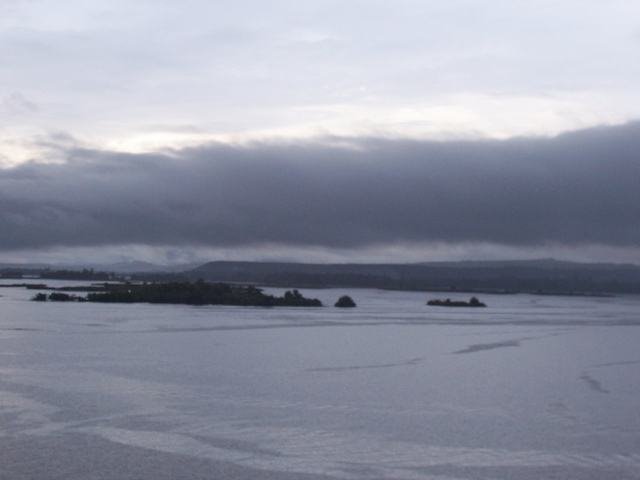
Okay, now the bike was full of lube, my back was free, and NH-17 beckoned. It was around 2.30pm. So off I went. There were a lot of trucks on the way but it was a pleasant enough ride. It again started drizzling lightly as I approached the glorious backwaters and the umpteen bridges which lay over them on NH-17. The overcast sky was ominous but beautiful and I stopped on one of the longer bridges to take in the view and a few photographs.


I continued in the drizzle. Soon before I completed around 400km, I had to refuel as well.

Before undertaking the trip, I had researched the stops on the way and Bhatkal had a reputation for having erotic pleasure for sale. Well, a little looking around is always interesting. This “looking around” proved to be quite a lark. I had found out that a place called Mysore Café was the center of the trade. As I reached Bhatkal, I stopped at one of the petrol pumps and asked for directions to Mysore Café from a local truck driver. He asked me why I wanted to go there, and I said to have coffee, what else! He wearily remarked that there were so many nicer places to have coffee but I got the directions out of him.

I went back, took a right turn and found a café with an almost desolate look and an unreadable signboard which looked something like saying “Mysore Café”. I asked the proprietor if this was Mysore Café and he replied in the affirmative. Now the fun started.

There was a well-decorated lady sitting in one of the cottages just outside the café but she seemed a family woman because there was a husband like character and child around. I went inside the café and looked around. There were six run-down tables and four chairs on each table and the whole place looked like no one had ever come there for anything. The cashier’s desk on a usual café is lined with biscuits, cakes and cold drinks but the desk here had nothing. Interesting.

I asked the shifty guy there if they served coffee. Yes, they did, he said. I asked for a cup. He went through the back door of the café into what looked like a kitchen and started boiling water in a kettle. It all seemed like this was not a café after all. It didn’t seem like anything else either. There was nobody inside. There was some kind of a residence on the back of the café (in the same building) which looked equally forsaken.

You must appreciate a few things at this stage. I had come on an Enfield, was wearing black jeans and a grey jacket and had my knife on my belt on the right side and my luggage in a black backpack on my bike, was well built, looked alien with my slightly long hair and had asked specifically if this was Mysore Café. Now if you are the proprietor of a shady establishment in a conventional town, how relaxed would you feel with such a guest inside your place?

I think the guy just freaked out thinking that I was from police or some gang.

The guy was decidedly scared and I decided to put him at ease. I shouted to him as he was bent over the stove not to bother with the coffee but he replied that the coffee was already done.
Alright. Bring it on. He brought the coffee in a woeful cup and saucer and gave it to me. I had been standing and looking around the whole time while he had shouted to someone in the back rooms to go upstairs (maybe one of his family).

I smelled the coffee. It smelled like shit, really. I thought of having it. Not having it would hurt this guy’s feelings but I thought of my guts’ feelings as well. I put the cup on the cashier’s counter and lit a cigarette at the front door. The shifty guy also came there alongside with me. The family living next to the café closed their doors after having had a good look at me.

I asked this guy if any people came there. He fearfully mumbled that no one came there and looked the other way. I then told him that one of my friends had visited this place six months back and had told me about it (a lie). He again started mumbling that no one had come there. I left the untouched coffee on the counter, paid him 4 rupees for it and told him that I was leaving. I think his blood pressure at that stage was about 200.

I was laughing inside as I took my bike and looked back at him and his decrepit abode of pleasure. Onto NH-17 again.

Now it really started pouring. I had put my jacket on and my bag was back on me. I continued without a care as the rain became heavier and heavier. My digital camera was secure in my waterproof backpack but my mobile phone (a new piece I had recently bought for five thousand) was in the left front pocket of my jeans. As I became increasingly more soaked I became anxious for the well being of the phone. Soon even my underwear was soaked with water and I decided to pull over till the skies cleared a little. I found a small tea stall by the side of the road and skidded to a halt. Hastened inside the shack and checked out my phone. It was alright and I put it into my bag. Asked for a hot cup of chai while I took out the remaining sandwiches.

The folks in that shack were native Kannadigas and didn’t understand either Hindi or English. The surroundings were quite pretty with hills in the distance and I asked about the price of land in that region. They didn’t even know the units of land measurement. Poor folks.

I shared some peanuts with them and as the sky cleared, I was off again. I wanted to spend the night at Gokarna, a place my friend had recommended as very beautiful. The sky was getting darker with the evening and Gokarna was still 50-60km away. I continued along the excellent road as I dodged oncoming trucks and lorries with their high beams on. At one time it was so dark and I was so blinded with the oncoming lights that I couldn’t see anything and had the distinct sensation of riding into the unknown darkness, into a nether world without knowing anything about it.

Finally came to the crossing where I had to take a turn towards Gokarna (13km away now). The road was full of potholes which were filled with water and so gave no idea about their depth. I navigated around them and continued on the road. It was quite dark and I had no idea about the surrounding landscape (only in the morning was I to know). I continued on and on for what seemed like an eternity (as it was dark, I was soaked and tired, and the road was so bad). I finally had the apprehension whether I was going to just ride into the sea as by my perceptions Gokarna had been left far behind. Ha!

I found the hotel where I wanted to stay (Hotel Gokarna International, it had a few foreigners staying there so I guess that made it international). The room cost a mere Rs 200. The room had a strange TV which required great dexterity to operate. As soon as one pointed the remote at it, the channel changed. So one pointed the remote and found something interesting then smothered the remote control with the blanket. It was 7.30pm and I was quite cold and first changed into something dry. Then went out, had some rice and dal with eggs and bought a 250ml bottle of brandy. Had a few sips of it, felt much warmer. Spread my clothes on the balcony to dry out and went to sleep.

Day Two

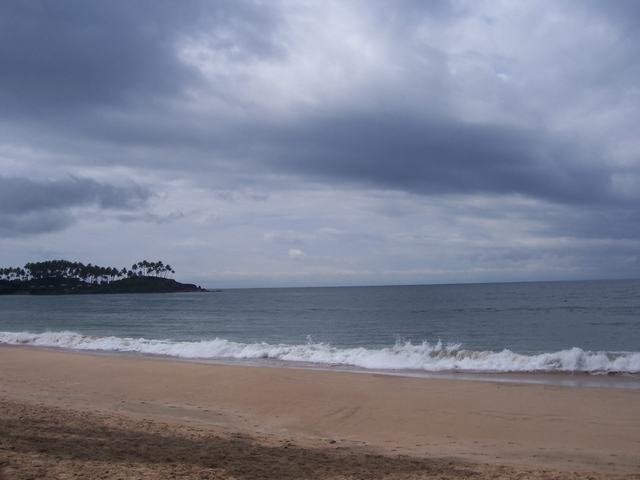
Woke up, had a hot bath, had some breakfast at the same place that I had had dinner and decided to check out the beach. Rode my bike to the beach. The beach had about fifty Indians (mostly family people) having fun with the water. There was a hill on the left and a great span of coast on the right which looked more solitary. I started walking to the right till I reached a stretch where there was nobody around, changed into my swimming trunks and had an enjoyable hour in the calm and warm sea. Took a few pictures, went back to the busy portion of the beach, had a soda and a smoke.


There was a beautiful Nepali lady selling t-shirts at one of the shacks and I winked at her. She became rather upset. I soon found out why. Her husband was around. Perhaps she wouldn’t have been so upset otherwise, I convinced myself and decided to move out of Gokarna and on to Goa. I didn’t find Gokarna all that interesting, maybe my friend had visited it in later in the year when the joint-smoking crowd is scattered around the beaches in this sleepy town.

Checked out of the hotel, packed my stuff on the backseat and rode off. The 13km side road which led to Gokarna was surrounded by beautiful hills and backwaters and even the road wasn’t too bad, I found out. In my weary and bleary stupor the evening before, I had judged it too harshly.

I was soon back on the NH-17, the clouds loomed over the hills but I was determined to outrace them. No such luck. Suddenly it started pouring in sheets and I pulled over into a bus stop shelter. I spent 15-20 minutes there and the clouds passed. I was on the road again. The NH-17 stretch from Gokarna to Goa is too beautiful to describe. Undulating hills, villages on top of those hills, great roads, occasional views of the ocean, negligible traffic, smiling and waving bikers … As I crossed out of the state of Karnataka into Goa the road became much narrower. I passed dense forests where the highway became scarcely more than a 20ft wide narrow road. What a great ride, however.

I stopped in one of the towns on the way to quench my thirst and asked a nearby mechanic to check the tension in my chain as after such a long ride, I was apprehending that it might be too loose. He confirmed the loss in tension and tightened it again. Again the friction started and I regretted having gotten it tightened and resolved to get it loosened again in Goa.

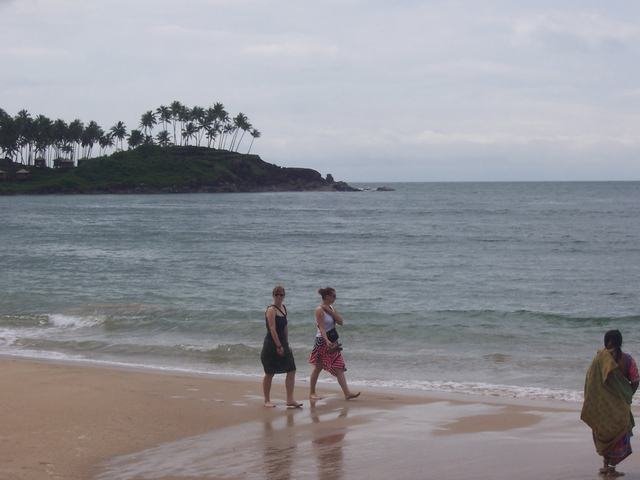
Reached a crazy intersection where it wasn’t clear which way NH-17 lay and I asked someone for directions to Margao which was to be my lunch stop. He pointed me towards one of the roads and I soon found myself at Palolem beach instead of Margao. However, it was a great beach, with shops selling foreign tobacco cheaper than airport duty free shops. I couldn’t resist buying a hand-rolling tobacco pack myself.

It turned out be a great stop. Margao wouldn’t have been half as good.


I enquired about beach side huts and took one at Rs 200 a night, put my stuff there, and had lunch at a great restaurant just outside the huts facing the beach. Had a nap and then went to the beach to have some fun with the water. Swam around on my back for an hour or so, came back to the restaurant and had a beer. Had a chat with a beautiful Israeli girl who was waiting for a guy she had met in the Himalayas to miraculously turn up right there in Palolem. What romantic hopes!

Spent the evening chatting and having dinner with her. Went off on the road behind the huts to have a walk and checked out my email at a cyber café. Came back to the huts, heard some trance music, and trotted to find out what was going on. Turned out some guys were celebrating the opening of a small café (it was to open the next morning). They were spaced out and I joined in the fun. Smoked a joint, wished them well and went back to my hut to sleep with a smile on my face.

Remember: Alcohol and foreign tobacco are cheap in Goa, especially at Palolem, which, after talking to many people there, is considered the most beautiful and chilled-out beach in Goa as of now.

Day Three

Had a great breakfast and a swim in the ocean before I decided to move onto the Northern side of Goa. Packed my bag, wished the Israeli girl good luck and went off. Again, the ride was marvelous. I crossed Margao, Vasco and as I approached Mapusa, took a left towards the Anjuna/Vagator beaches. Had a Goan fish curry and rice lunch at Anjuna and watched a family taking care of their crying babies as I sipped my beer. The baby stopped crying and all was well with the world.

Found that there weren’t any beach side huts in Anjuna, so went down to Baga beach. No luck there as well. I didn’t want to stay in a hotel so enquired some more. Some said that beaches further up north (Morjim and Aswim beaches) had beach side huts.

Rode my bike around for a while. Refueled it, got the chain loosened again to my satisfaction by a cursing mechanic who was having a bad day, checked my email in a cyber café, put some Navratna oil onto my scalp (it felt deliciously cool) and went off to search for some beach side dwellings.

Morjim beach is famous for turtles on the beach but it didn’t have any place to stay so I moved further north, after having found a newly built hotel nearby which was charging Rs 1000 per night. Looked at the map and found that the Mandrem and Aswim beaches had nicely named places called the Papa Jolly’s hotel and Silent bar. The road led uphill towards Mandrem. Papa Jolly’s hotel turned out to be a super-expensive place charging Rs 8000 per night (it was luxurious but still the price was way too high). The owner was a disciple of Sri Aurobindo and he sympathized with me when I mentioned the exorbitant room rate. He helpfully told me that there might be some huts further up the road.

After enquiring at a few establishments which were getting their huts ready for the rave season (Aswim and Mandrem beaches, being up and solitary, attract the rave crowds at the end of each year), finally found the Silent bar and restaurant where a Haryanvi man, obviously drunk offered me a hut for Rs 300. I jumped at it. The bamboo hut was facing the beach and had electricity and a lock. What else does one need (if even that)?

I spent the afternoon and the evening lazing around the beach and in the sea-water. As the sunset approached, I pulled up a chair onto the utterly secluded beach and watched the stars rise while I finished the bottle of brandy.

Feeling cozy and warm and still not sleepy, I took my bike to ride along the hilly road to find out more about the adjacent villages. I found some interesting things: a woman operating the counter at a wine shop in the village, utterly no tourists that early in the season, no cafes or snack bars, and a half moon illuminating a road having hills on one side and the ocean on the other. Great place to relax.

Had a relaxed night in the hut and woke up to another glorious day which was to prove to be the most nerve-racking in the entire trip.

Day Four

Called my friend Shalender in Hubli who works in the railways there that I’d be ending up at his place by evening. Hubli is merely 250km from Goa and I optimistically estimated the trip to take not more than 5 hours. It was to take more than 10.

The highway NH-4A from Vasco to Londa is easily the worst highway in India. It goes through the hills but is so crowded and broken down by noisy smoke-bellowing trucks carrying iron ore from nearby mines that one wonders how hell can be so close from heaven.

The road is a sheer disaster and it took me more than four hours to reach Londa. The motorcycle and myself were dusty red with iron ore and the mud and water in the potholes on the “highway”, and I must have been a sight to behold as I stopped for a soda on the Londa-Belgaum-Hubli crossing. There was a Regional Transport Office at that crossing and I went there and complained about the horrid road conditions. The officer didn’t know what to say and he took my decision of writing to the papers about the condition of the road very well. I asked him whom in the government should I write to regarding the road and he scratched his forehead in confusion, finally coming up with the definitive answer that he didn’t know. So much for apathy.

I asked for the condition of the road from Londa to Hubli and got the definite impression that the road was really bad and I would be better off going to Hubli via Belgaum.

I took that route. It was to be a lesson in its own right.

The road from Londa to Belgaum (NH-4A) is superb and I made the 60km in less than one hour but the fun started after that.

I didn’t know which turn to take for the highway to Hubli (it was supposed to be a right turn according to the map). I asked a traffic cop and he confused me no end with U-turns and whatnot. I tried to follow his directions, got lost and asked someone again. He pointed me to what was to become a subzi mandi with hardly space for walking between the fruit and vegetable stalls. I rode my bike through that maze, conscious of the daylight getting dimmer and dimmer and finally after a dozen turns ended up on a pothole ridden road which I wearily accepted as the Belgaum-Hubli highway. Not so, fortunately or unfortunately. The highway was another big road up ahead without any on-ramp. How to get onto the imposing highway? Well you take a parallel side road which would then connect with the main highway, I was told. I took the side road and it just went on and on. Finally I realized that the “connection” to the highway were unbuilt sections and I just had to go over one of them.

The fun had just started. The highway (NH-4 to Hubli) was under construction. There were no markings on the road, no street lights, and it was an undivided highway most of the way. So I had to ride with high beams in my eyes, dust flying all over and lots of trucks going all over the place. Undoubtedly the most dangerous leg of my entire journey. I wanted to do good speed to reach Hubli in time but the road was too dangerous to cruise at a high speed. Unexpected speed bumps, diversions and whatnot lay on my way.

I finally found a Maruti Alto with a family inside going to Hubli at a good speed (80kmph) and decided to take its shelter as I rode. I followed it all the way to Dharwad (Hubli’s neighboring town) and provided a lot of amusement to the inmates of the vehicle. No matter what they did, how fast or slow they went, I was always on their side or behind them. The kids in the Alto were screaming with joy at me and waved wildly whenever I threatened to overtake them.

Reached Hubli and received a warm welcome from Shalender, his wife Aastha and their lovely son Saksham. Had a home-cooked dinner, chatted with Shalender who was my room-mate in Jwalamukhi hostel at IIT Delhi, got convinced that I should stay at least one day with them instead of just leaving the next morning and went to bed to have a well-deserved sleep. I was glad to be just alive after passing through all the hellish realms during the day.

Day Five

Shalender had to go to his job while I lounged around the house and later went off to search for a cyber café. There was not even a single working cyber café in the entire city. Imagine my surprise then, when coming back dejected to Shalender’s place I found a Reliance web-world outlet which had a state-of-the-art internet browsing center (complete with LCD monitors, attached web cams, broadband speeds). I couldn’t believe my luck and punched away happily at the keyboard for an hour.

In the evening, went off with Shalender to the railway shed. The shed was specifically to service and maintain the American made (and their indigenous copies) GE’s EMD (ElctroMotive Division) engines. Saw the insides of diesel railway engines, superficially understood their parts and working and rode in one of them. Then Shalender took me to a simulation center where new locomotive drivers got their training. The simulator was state-of-the-art, with hydraulic pumps simulating engine vibration and motion while the screens showed realistic Indian tracks, platforms and obstructions (cows, trees, unmanned crossings). I had fun driving the engine for 10-15 minutes and had to suddenly brake as a tree was blocking the tracks. All good fun.

Day Six

Had a nice breakfast, wished my friends well and started on the 400 km journey back to Bangalore at 7.30am.

The first 200km of the highway NH-4 from Hubli to Bangalore are under construction. For a couple of kilometers, one side of the highway runs fine (with both sides of the traffic sharing the road), then one suddenly one has to turn over to the other side because now that side is done and this one is under construction. I failed to understand this sadistic streak in highway builders.
Why couldn’t they finish one side first since it would take the same amount of time? Each diversion had four speed bumps, two where the constructed side ended and the other two at the start of the other side. Sometimes there was no warning of the speed bumps, but one learned pretty quickly to expect them.

I stopped just before Chitradurga for a soda.

However, the last 200km were fabulous. Well-paved, well-marked, wide six-laned (or even eight laned at times) highway. Even with a light drizzle (and sometimes heavy rain) it was a safe pleasure to ride at 100kmph.

There were two Reliance petrol pumps on the highway which were at par in food and rest-stop facilities (showers, beds, phone booths) with gas stations in the west. I was pleasantly surprised to find them and congratulated the owner of one of them. These facilities will certainly make traveling on Indian roads more convenient and pleasant. He mentioned that the main source of revenue for them was not the sale of petrol but the sale of food as hundreds of buses stopped at their plaza for having lunch or dinner.

I continued towards Bangalore at great speed.

I had lunch at a Kamat Upachar restaurant just after Tumkur when it started raining very heavily. I waited for the rain to lighten as I continued. I reached Bangalore at 2.30pm, went to office to pick up the keys to my ex-colleague’s apartment (where I was staying). Had a chat and a few smokes with my ex-team and went to the apartment to reflect back on the long trip and to wash myself and my iron-ore stained clothes.

Got the bike washed the next day. It looked as new. Hehe!

Friday, November 04, 2005

Transporting a motorcycle in India

When I wanted to transport my motorcycle from Bangalore to my home in Patiala, I learnt a lot about the options, pitfalls and procedures required in doing so. This article documents my findings so that they may be useful to people in future.

There are three main options:

1. Ride the motorcycle to your destination.

This is the simplest (and the most inconvenient: distance from Bangalore to Patiala is around 3000km) of options and one must consider a number of factors:

a. Even though the ride may be an experience to cherish, do consider that you may only safely be able to do 300-400 kms in a single day. Even on a good stretch of the highway, doing beyond 90-100kmph is not recommended.

b. Riding on Indian highways is not going to be a smooth and safe affair. Most highways in India are not made for prolonged cruising. Many of them may be under various stages of construction. Riding in the rain is ok but one has to be very careful since apart from the loss of traction, visibility will also suffer (if you are wearing eye protection, as you must). Riding at night should be a strict no-no as the oncoming vehicles’ high-beams all but blind you, especially if you are wearing some kind of eye protection (which you must, anyway, on a motorcycle). Be extremely wary of sudden speed bumps (especially when approaching towns) and unexpected potholes.

c. Factor in the cost of petrol, of overnight hotel stays, of the wear and tear of the bike (especially tires), etc.

d. Motorcycles do not have spare tires with them (unless you make special provisions). Other breakdowns may also happen. A breakdown on a desolate stretch of the road will present difficulties. You may be able to hitch a ride (along with your broken down bike) on a passing truck to the next service station but obviously it is going to be very tricky (especially if you do not know any Indian languages). Also, if you are riding an Enfield, most run-of-the-mill mechanics will not be able to do justice to even simple troubleshooting on the bike. You will have to engage an Enfield specialist.

e. If you are transporting a lot of luggage (or even a moderate amount of luggage along with a pillion passenger), this option is useless. Usually a pillion passenger is good to have (in case of trouble), but if you are carrying a hefty backpack (as you would be, on a long ride), it would be almost impossible to also carry a passenger (he/she will be having her own luggage as well). A luggage rack which can take a backpack or two will be extremely useful in this case. You can get one attached to the sissy bar of your bike for Rs100-200 at a spare parts store.

f. You can however, engage a cargo company to transport your luggage via surface vessels while you ride your bike. The charges are usually reasonable (from Bangalore to Chandigarh, DTDC Cargo, one of the top courier/cargo companies in India, quoted me Rs 45 per kg). For luggage, the cargo company will be liable for loss or damage, so make sure you mention the value of the goods on the cargo hand-over form.

g. Carry all papers with you when you ride your bike, i.e.: Registration, license, insurance, and your passport, if applicable.

2. Transport the bike on a truck.

This is a viable option, but again consider a number of factors:

a. You can engage a trucking company yourself (go for one which has a big enough fleet and has experience in transporting two-wheelers). This will be cheaper by about 50% than engaging a logistics/cargo company but obviously you will have to forego dedicated personnel, door-to-door transportation, professionalism, call center support on the whereabouts of your vehicle etc. Also, the cheaper the trucking company’s rates, more is the probability that your vehicle will suffer damage due to careless handling. Most often, the headlight/side-indicators/fuel-tank suffer damage. Almost without exception, some parts of your vehicle will be dented/scratched. Loading a vehicle onto a truck is not a smooth affair unless there be special inclined loading crates etc. and since the bike will be juxtaposed between a lot of varied cargo (some may even sit on top of it), cosmetic damage to the vehicle is inevitable.

b. You can engage one of the cargo companies (especially GATI, which has a good reputation for reliability and quality). They will pick up the bike from your doorstep and take care of everything except packing the bike properly with gunny sacks and padding. Most Indian cities have a GATI branch. Their website (as of today) is useless so you have to call their call center numbers to get information about your vehicle, their fees and charges etc. From Bangalore to Patiala, they quoted me around Rs 2700 for an Enfield 350cc motorcycle.

c. You will have to get the bike securely packed with padding and gunny-sacks. You can just go to the train station and have it packed there and have the cargo company pick it up from there, or if you are directly dealing with the trucking company, usually they have packers moving around from where the trucks leave.

d. In any case, the trucking/cargo company will not be liable for damages to your vehicle. According to them, your vehicle’s insurance will cover any damage. Do make sure, however, that your insurance policy covers transportation of the vehicle in a third-party vessel. Also, since usually there is a deductible in case of damage, and replacing parts on your vehicle is always painful, and the insurance claim won’t take care of scratched parts, I wasn’t very charmed by this safety net.


3. Transport the bike on a train.

This is the option I exercised, and despite some inconveniences that I suffered, I recommend this option.

There are two ways to ship something on a train: as luggage or as a parcel. To book something as luggage means you must be traveling on the same train, to book something as a parcel means the railways will take care of figuring out which train to use to send your stuff as cargo. In case of parcels, it may take 2-3 weeks for your stuff to turn up at the destination and only a personal contact (or some bribe) in the railway parcel office will ensure that you know which train is going to carry your vehicle. The rates for railway cargo are in three slabs: Ordinary, Mail/Express and Rajdhani. As is evident, the rates are according to the speed of the train. Rajdhani trains are the fastest trains in India (usually originating/destined-for Delhi). Choose only M/E or Rajdhani, do not choose Ordinary, unless you have a masochistic streak in yourself. The quality of the personnel handling the trains and their cargo is directly proportional to the speed and reputation of the train line.

For booking your vehicle as a parcel:

a. Go to the parcel booking office on the railway station one day prior to the actual day when you want to let go of your bike, and find out about transport charges, packing charges, expected time of arrival of your bike at the destination etc.

b. Get your bike’s registration and insurance papers photocopied and carry them with you the next day.

c. The next day, make sure you carry a pen and a felt-tip marker pen with you. The marker pen is required if the packers don’t have one and you have to prepare an identifying plate to be put in front of your bike.

d. Next day, take the bike to the parcel office so that only a miniscule amount of petrol remains in it (say 200ml). The railways insist that the bike be “dry” of fuel when it is consigned to them but a little bit of petrol is tolerated as you will need it to ride it from the destination railway station to the nearest petrol pump. Remove the bike’s papers from the bike’s compartment and keep them with you.

e. Get the bike packed by one of the packers who will approach you for this job. Expect to pay around Rs 120-150. Remove the bike’s rear-view mirrors (the packers will usually do this on their own) and have them packed between the handle bars and the headlight assembly. Have the bike securely packed and have the packer attach a metal label to the front of the bike detailing the owner, origin, destination, the bike’s license plate number and the current date.

f. Go to the parcel clerk and have the bike booked. Take the receipt. Declare the value of the bike as per your convenience. Up till a value of Rs 10,000, there are no extra charges. Beyond that, the insurance charges are extra 1% of the declared value. It is not a big issue and it is upto you. If the bike is lost (e.g. the train suffers an accident etc., railways will only pay you the declared value of the goods, obviously) On the parcel form, mention the bike’s engine and chassis number as well as the fact that it is packed and free from fuel.

g. Go home and plan the rest of your journey.

For booking your vehicle as luggage:

a. The day prior to your journey, go to the luggage booking office (this is separate from the parcel office) and have a look around.

b. The next day, get a photocopy of your bike’s registration and insurance (as many copies as there are legs in your journey, one copy for each leg), a copy of each of your train tickets, a pen and a felt-tip marker pen and go to the luggage office about 3 hours prior to the train’s scheduled departure time, with a miniscule amount of fuel (200ml or so) still remaining in the bike. You can either carry the rest of the luggage with you at that time itself or go back to your hotel and get it to the train station after the bike is booked (that’s what I did, since one has to go around quite a bit for getting the bike packed and to move it onto the proper platform where the train is going to arrive).

c. Get the bike packed as detailed in the previous section on booking it as a parcel.

d. Get the bike booked as luggage for your journey. Once again, declare the value of the bike as you would like to. The minimum amount, which is Rs 10,000 does not attract any extra charges. Take the luggage receipt, and the endorsement on your train ticket and keep the two securely. You will need both to get the bike back. If you have a journey which involves multiple legs, it is my understanding that you will have to book the luggage again at each leg.

e. Once the bike is booked, make sure it is moved to the right platform where the train is scheduled to arrive. You may have to pay the person in-charge of moving the bike to that platform something like Rs 50 or Rs 100 to do so, even though it is his job.

f. Wait for the train. When it comes, make sure the bike is loaded (the railways’ own porter will load the bike and will expect around Rs 20 to Rs 50 as his “fee”). If you contact that porter beforehand, he can do this without you being present at the loading carriage but it doesn’t hurt to take a look if the bike is parked securely in the carriage.

g. Have a pleasant journey and arrive at the destination station.

h. Go to the luggage release office / parcel office (usually near platform number 1) and get the gate-pass prepared after surrendering your luggage booking receipt and a copy of your train ticket. You will have to show the original ticket with the luggage endorsement as well.

i. Go back to the platform and get the bike handed over to you by whoever is in charge there (again expect to pay around Rs 50 to Rs 100 for getting the bike released).

j. Take the bike out of the station and park it in the two-wheeler parking if you are breaking your journey at this station for a couple of days, or get it re-booked for the next leg. If you are breaking the journey, re-book it when you come back to board the train for the next leg and follow steps c to f.

Sometimes, when the train stoppage at a station is only 2 minutes or so, the luggage can’t be booked for that station (since there won’t be time to get it unloaded). I’m not sure if you can negotiate the luggage booking for such a station with the luggage booking office but in the worst case, if you are unable to get it booked for your destined station, book your bike for the previous major stop, complete your journey to your planned destination and then go back the same day or the next morning to the previous major stop (on a bus or taxi) and get the bike released and ride it to your destination (hopefully the two stations won’t be too far apart!). Make sure you carry your original ticket, a copy of it and the luggage booking receipt with you when you go to get it released. It is once again my understanding that leaving your booked luggage at the platform is permissible free-of-charge for something like 24-48 hours, after which it attracts extra charges.

For me, the main complication was that I was alone and carrying a lot of extra luggage with myself in the train and moving around the train station to the various offices with all that baggage was not convenient (if I used porters, each trip was Rs 100 to Rs 200; if I chose to keep the luggage at one place, I had to find someone to keep an eye on it). There are many ways to make this situation easier. If you are coming to the station in a taxi, keep the luggage in the parked taxi and come back to take it when all the formalities of the bike booking are over. If you are disembarking from a train and need to go to the luggage office, have one of your fellow passengers take care of your luggage on the platform while you take care of getting the gate-pass for the bike, or have a porter guard your luggage after you note down his badge number (I am not exactly comfortable with the last option as the value of your luggage may be more than an year’s salary for the porter but it did work for me). In each case, carry your valuables and papers with yourself in a small backpack etc. so that even if the worst happens and your luggage disappears, at least you are not totally helpless. You can also book your luggage in the cloak room on platform 1 provided each piece of luggage is securely locked.

I had to carry my motorcycle from Bangalore to Patiala, with a three day stop in New Delhi. I did not have any problems in booking the bike in Bangalore for Delhi. After I booked the bike, I went back to my place and brought my luggage to the train station. The journey from Bangalore to Delhi was un-eventful. I was mindful of the problems awaiting me at Delhi and I befriended a fellow passenger who was also to disembark at Delhi. At Delhi, I asked him (he had to wait a couple of hours for his connecting train) to keep an eye on my luggage as I got the gate pass for my bike.

I was the victim of a small scam while getting my gate pass. The clerks told me that I had to pay an extra Rs 100 as “delivery charges” for my bike. I told them that I had paid whatever I was asked to at the Bangalore station but they said the delivery charges hadn’t been paid. They asked for Rs 100 (the round figure should have made me suspicious, but I was in a hurry since my friend was waiting for me) and even issued me a receipt for the Rs 100 (God knows what kind of receipt it was, but they made everything sound quite official. Maybe it wasn’t a scam after all, but when I later booked my bike from Delhi to Patiala, I specifically asked if I had to pay “delivery charges” and nobody had heard this term!!).

Once I got the gate pass, I came back to get my luggage, thanked my friend profusely, hired porters to carry the luggage and went to get my bike. I had to pay Rs 50 to a policeman to get the bike released. I then wheeled my bike to the two-wheeler parking just outside the station (on platform number 12, since the luggage booking office is on platform 12 and I had to again book my bike for the next leg three days hence) with the porters in tow. I parked my bike, took the parking receipt, took a taxi and went off.

Then came back in a taxi three days later, asked the taxi driver to wait with my luggage in the taxi while I took care of booking the bike at the luggage office. That took more than two hours (I did not have a photocopy of the registration, did not have a metal info-plate on the front of my bike (since that was not asked for in Bangalore, and in any case I would have had to get a new one for this leg since the origin/destination were different), the luggage booking guys were grumbling that the stoppage at Patiala was only two minutes and I would have to book my bike only till Ambala but then they found out that actually the stoppage was 5 minutes and they relented on their own!). I booked the bike, asked the porter to transfer it to the correct platform but he dithered, saying that lots of other bikes were also waiting and I couldn’t insist that the bike be carried on the train on which I was traveling (I think he was bluffing, but I didn’t have the time to argue, as my taxi driver was still waiting for me). I paid him Rs 150 and he immediately sprung into action, and started to wheel the bike.

The Delhi luggage booking offices are a big mess, to put it mildly. I left my bike there while I went to get the registration photocopied, to get the metal identification plate made etc. and I was wary that my bike might disappear from there (since it hadn’t yet been consigned to the railways and therefore was still my responsibility). Fortunately, nothing happened; and even though I had walk about 3km here and there (the photocopier is way outside the train station, the id-plate makers are somewhere else and so on…) finally I was able to get the job done.

I went back to the taxi, hired porters to take my luggage to the platform, reached the platform, asked one of them to wait with my luggage (I told him I’d pay him Rs 50 to load my luggage in the train compartment) and went around to search for my poor bike. Unpleasant surprise! It was parked on a different platform than on which my train was supposed to arrive. Enough! I decided to take matters in my own hand. I took the bike and wheeled it to my platform and parked it next to my baggage. About 15 minutes before the train was supposed to arrive, the railway porters appeared out of nowhere and said they had been looking all over for my bike. I told them in a somewhat harried tone that they had parked my bike at the wrong platform and I had to personally wheel it to this one. Well, not even a word of apology! They took the bike from me and said they would take care of loading it.

The train arrived, I had the porter load my baggage, paid him off, and went towards the luggage carriage to check my bike out. (Note: once the baggage is loaded in an air-conditioned compartment, with other passengers being there, it is quite safe to go out of the train and check things out, in my opinion. But to be safer, have one of the passengers keep an eye on your baggage). Sure enough, the bike was loaded alright; to make a long story short, I just paid the loading porter Rs 50 and went back to sit in my compartment, exhausted.

Reached my destination station. There my parents were present to receive me and so there were no complications at all.

Mission accomplished. The charm in India is that even routine things like this take domain expertise.

Monday, October 31, 2005

The mind of a criminal

A criminal is one who does not respect the laws of society.

Every criminal knows that he is breaking the law. Still he does it. He has no respect for the law. He lives by his own rules.

The laws of society operate to keep the animal instincts of seeking unbridled pleasure and of malice towards one's fellow humans under check.

The feeling of being wronged, of being unjustly treated gives rise to disrespect for the laws. If the laws are against "me", why should "I" respect them? An unfair society ends up in a spiral of increasing crime and corruption.

The more corrupt a society, the more fervent the value-instilling machinery. How else can one explain the thousand and one spiritual, moralistic teachers but as the agents of righteousness in a thoroughly criminal society such as India?

The "I" has unlimited capacity for self-aggrandisement and hedonism. When that capacity is thwarted by society, thence arises the criminal tendency.

It is futile to build a so-called just world by outward adjustments. There is resentment in almost every human being towards the way the universe treats him. No matter how equitable the distribution of wealth, there will always be a lot amongnst us who will be jealous of another's wife or husband, of another's skills, of another's attitude towards life.

The normal man, the one who is afraid, is jealous of the successful as well as the criminal. His jealousy takes the form of flattery and resentment towards the successful, and hate and violence (and sometimes adulation of courage) towards the criminal.

From childhood till old age, the struggle to get pleasure is met by fierce competition and hostility. And if a man thinks that he can avoid getting caught, or if the social morality is not deep enough in him, he will try all manner of tricks to please and sustain himself.

It is only fear, or an instilled sense of morality, that deter a man from committing a crime.

If a society fails at instilling fear, instilling values and morality is considered the next best option. Morality works through the feelings of guilt.

The criminal is one who has manages to thwart both his fear and his guilt. He commits his crime furtively, fearful of punishment, but brave enough to risk it.

The lesser the fear, or the conditioning, the greater the capacity for crime.

As most morality coexists with religion, is it a surprise why atheist (e.g. the communist) regimes are so totalitarian? If guilt has no other foundation than morality, and if morality only works with a sense of absolute good (a.k.a religion), then instilling fear is the only other option, no?

The institutions of society are designed to instill this fear and conditioning in man. As children, we are wont to indulge ourselves, and to expect others to oblige us. But as we grow older, we realize that people tolerate our tantrums and selfishness less and less. We learn to temper our instincts. This social conditioning exists not just in man. In various species of animals, aggression is met with aggression, ambition is met with violence, and so on.

Now there are many ways to achieve pleasure for oneself. Those whom circumstances favour find themselves flush with money and influence, and for them, it is important that the others follow the established laws so as not to threaten their own position of power.

The subservient amongst us try to succeed by following the rules and the instilled morality, and so few of us succeed that way. The instilled morality makes sure that we don't try radical means of upsetting the power structure.

There is a difference between an unfair system and a corrupt system. Systems are unfair if the laws are geared towards serving the powerful. Unfair systems may very well be law-abiding systems. (Consider the capitalist system). Corrupt systems are those in which breaking of laws is rewarded, not punished. (consider the political system in India).
...

After a certain age, the fear of punishment overtakes the enthusiasm of taking risks, because the organism loses the energy to start afresh. The cost of censure and punishment rises in proportion with the cost of starting afresh in life.

Children are not punished harshly. We recognize that their conditioning is not yet deep enough, and so their animal instincts may as yet be forgiven.

The criminal is a failure for society, and as such he is a danger. Such men must be made examples of.
...

What happens to the psyche of a normal enough man if he is caught for something that he considered aberrant but safe enough to try?

There is a whole kaleidoscope of different emotions. A little guilt, a little remorse, a little regret (that he should have been more careful not to get caught), a little learning about what (and how) he should try in future, a little shame, a little fall from grace (which can be covered up with bravado and boasting), a little self-justification (how can one ever admit that one was wrong?), a little cover-up of oneself, a little bit of denial (was it really wrong?), a little bit of resentment towards the ones who caught one, a little bit of ridicule and abuse towards the more moral (those cowards!), a little bit of feeling a hero (one tried something risky, didn't one?), a little bit of sadness, maybe anger towards someone who was an agent of discovery (voluntarily or inadvertently) (what a snitch!), a little bit of rebellious talk against the established order, a little bit of trying to make the best of a bad situation (pleading, manipulating, showing sorrow, expressing that one has been wronged, cunningly trying to win the sympathy of others, lying, ...), ...

Oh what an entity the self is! It is the wonder of wonders.

Does one need to watch a movie or to read a novel, if one knows how to read oneself and one's fellow humans?

Truth is stranger than fiction, indeed.

Thursday, September 15, 2005

On Bollywood

This monologue meanders through various psycho-social aspects of
Indian cinema at present. Yesterday I saw a contemporary Hindi movie,
Salaam Namaste. This movie, is in many ways, a representative of the
current neurosis gripping the metropolitan crowd.

However firstly, I would like to talk about three of my favourite
movies from Hindi cinema.
  1. Ardh Satya: It is Govind Nihalani's first movie about the impotence a man suffers when he joins the machinery of society. A sub inspector in Bombay, having grown up in a violently patriarchal family is unusually sensitive about justice, fairness and respect for the common citizen. As he observes the injustice and cruelty of the urban landscape, and as he forms a relationship with a woman (a college teacher), he inwardly disintegrates and moves towards disaster, personally and professionally.

  2. Woh Chhokri: It is a TV production starring Pallavi Joshi and Om Puri in which a poor girl, a disowned daughter of a career politician gets bounced around in society, to one exploiter after another, and finally is killed at the orders of her own father.

  3. Ye woh manzil to nahin: Three old ex-freedom fighters get together in the twilight of their lives to see the mayhem of student activism in modern India. They strive for redemption, suffering from a distant guilt about having betrayed a friend; and achieve it in a strange way after trying unsuccessfully to save an honest student leader from death.
As one can see, the three movies weave the tapestry of individual
lives in the context of the larger socity and the culture of the
times. All three can be called tragic movies, in that they offer no
hope for man, but all three are triumphant in that they show how an
individual can cease to resign to life-threatening pressures and
maintain one's integrity. Even though the individuals are common and
suffer from human frailities, a glimpse into their psyche's offers one
the unique privilege of learning about the pressures of modern life.
...

These movies were not mainstream movies. To contrast them to the
the current mainstream movies is useful to show what entertainment
and a movie-going experience means to the modern crowd.

I will state my observations aphoristically, since I am more
comfortable with this mode of communication.

Today's movies are made for consumption, not for contemplation.

As one of my friends put it, today's movies are made for kids and
adoloscents, not for adults.

In the angst of modern city life, of the unending pressures and
nervous tensions, one craves for relaxation and unwinding. The
escapes in a modern city are made for that purpose.

Today's movies do not portray the reality of life. They portray a
dream world. And as the reality becomes more and more bitter, these
movies are more and more successful.

As India's culture and familial structures suffer from a crisis of
values and conformity, either a joint family is celebrated, or
unusually sensitive and friendly parents are depicted, or the family
is ignored altogether in the depiction of a superficial freedom.

Freedom to live as one wants is not the same as freedom from one's
background and instinctual behaviour. Audiences love to see the
traditions and instincts in action, but with a much greater focus on
the individual.

The bodies of the actors and actresses of yore were not perfect.
Today the heroes have sculpted bodies and the actresses have gone into
the nether-world of moden make up.

As the story and the psyche of the characters becomes uninteresting,
to hold the interest of the audience, clothes, cars and toys, locales
and artificially-manufactured comic situations have to be introduced.

Indian cinema heavily plagiarizes from the western movies. Some of
the greatest Hindi movies have been rip-offs and a melange of various
western soaps and movies.

As Indian movies are now shot almost exclusively on foreign locations,
this is another level of escape from the hideousness of the Indian
landscape. Right outside the theatre, one can find blind beggars,
children wearing dirty rags, and piles of garbage. What contrast!

In such movies there is a patetic show-off of the lifestyle of the
west as well as that of the rich living a western lifestyle in India.
There is nothing wrong with western lifestyle, but isn't there a
psychological reason it is sold in media to the masses in poor
countries?

Individuation and personal idiosyncracies becomes more pronounced in
the characters in such movies because people themselves crave for a
recognition and appreciation of their whimsical selves.

Today's movies trivialize thought and depth. Attitudes and narrow
visions are celebrated rather than seen as detrimental to harmony.

As in the daily life we become more and more powerless, politically
and socially (voluntarily or otherwise), power-plays in individual
relationships become more pronounced and the only evidence of our free
will.

Repetition is a routine feature of comic relief in Indian movies. A
mannerism or a particular turn of phrase (either in a kid or in an
adult) becomes the cue for laughter. Representative examples of this
technique are the role of the servant in "Maine Pyar Kiya", of the
Sikh child in "Kuch Kuch Hota Hai" and of the Crocodile Dundee in
"Salaam Namaste".

Repetition of a particular turn of phrase or mannerism is considered
something which would make a hero/heroine identifiable, but it ends up
making him into a caricature.

And of course, the western standards of physique, facial features and
skin colour are all pervasive in our media. Aquiline noses, blue
eyes, extremely fair skin, prominent jawline in the male, shaved
chests for the male, toned muscles, thin bodies for the female and so
on.

Predictably, therefore, the present-day movies, portray the deep
inferiority that Indians have towards their own selves, bodies and
intellect.

The greatest Indian movies, according to me, are those which are
stories about human beings living in India, whose individuality comes
in sharp focus not because they possess superficial attitudes, but
because they are unable to be mass humans, conforming neither to the
western standards nor to the eastern. Ray's Apu Trilogy and "The
Middleman" and Mrinal Sen's social commentaries come to mind.

Today entertainment is mass-produced in the sense it is adjusted to
cater to what the masses want. And as being a mass man is abhorrent
to me because it would make me accept a set of beliefs (whether
eastern or western) and conformant behaviour patterns, I rejoice in
alternative cinema.